In dog training, a dog can wait, walk alongside the trainer and respond promptly during lessons, yet resume barking for play or pulling on walks at home. Owners understandably wonder whether the training has been forgotten. One important possibility is that the old behaviour still works in the home environment.
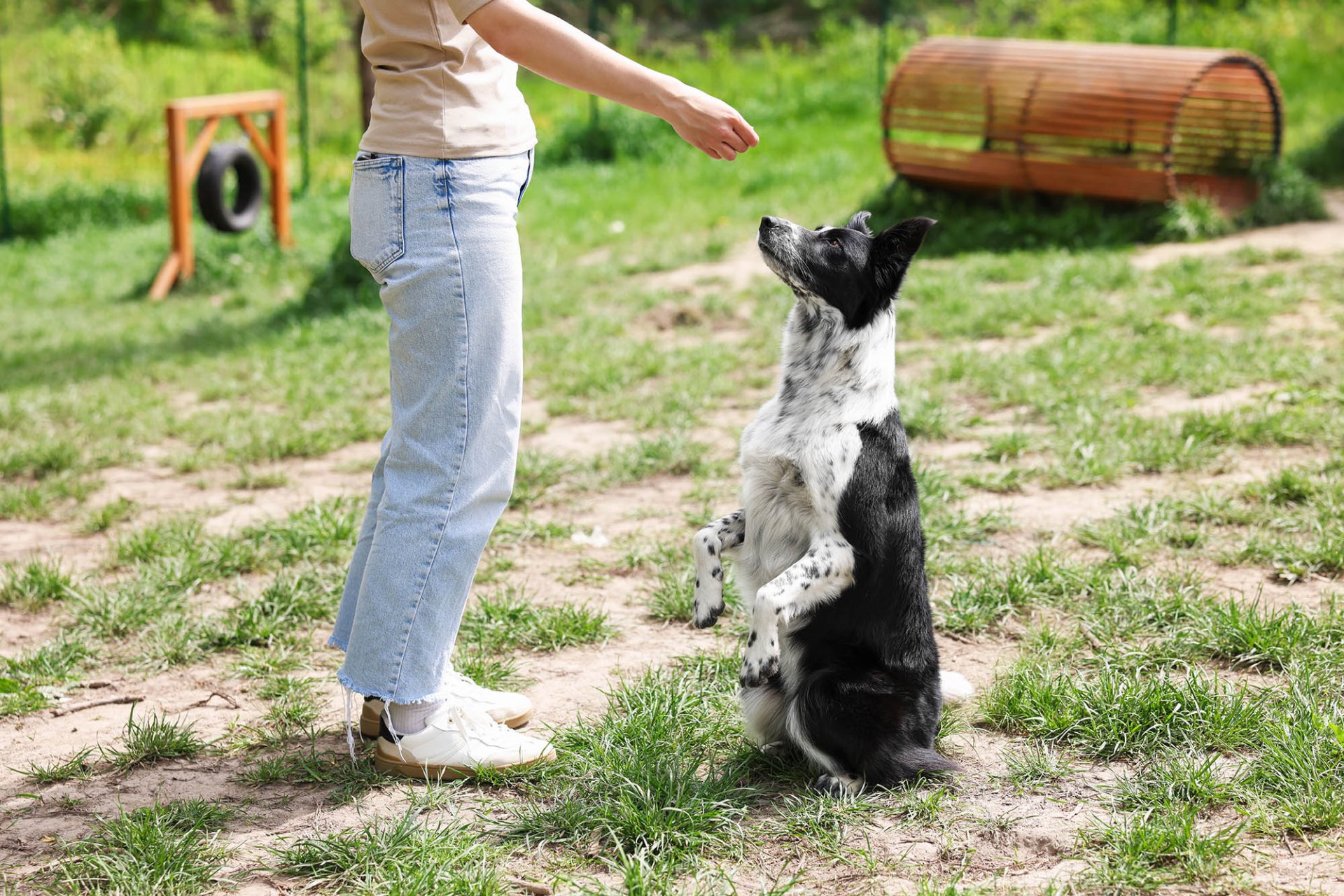
This article focuses on what happens when people give in to the behaviour they want to change. Learning a new skill with a trainer does not automatically remove the outcomes that maintain an existing habit with the owner.
Dog training: the same dog can behave differently with different people
Think about someone behaving differently with a teacher and with their mother. They may follow a familiar classroom rule but try pleading at home because previous experience suggests that pleading sometimes succeeds. The comparison does not imply that every mother indulges or that every teacher is strict. It illustrates how experience with each person can influence behaviour.
A dog can likewise learn which actions lead to desired outcomes with different people. If waiting starts a game with the trainer but repeated barking starts it with the owner, different behaviour can make sense under those different arrangements. It need not establish that the dog has forgotten the cue or is challenging the owner.
When giving in keeps the habit useful
Imagine a dog bringing a ball to an owner who is working. The dog nudges and then barks. The owner throws the ball to stop the noise. From the owner's perspective the disturbance is over; from the dog's learning history, barking has just started a game.
Saying “no” before throwing does not remove that outcome. The useful question is what the dog gained after the behaviour. A similar pattern can occur when pulling on the lead repeatedly gains access to an interesting smell.
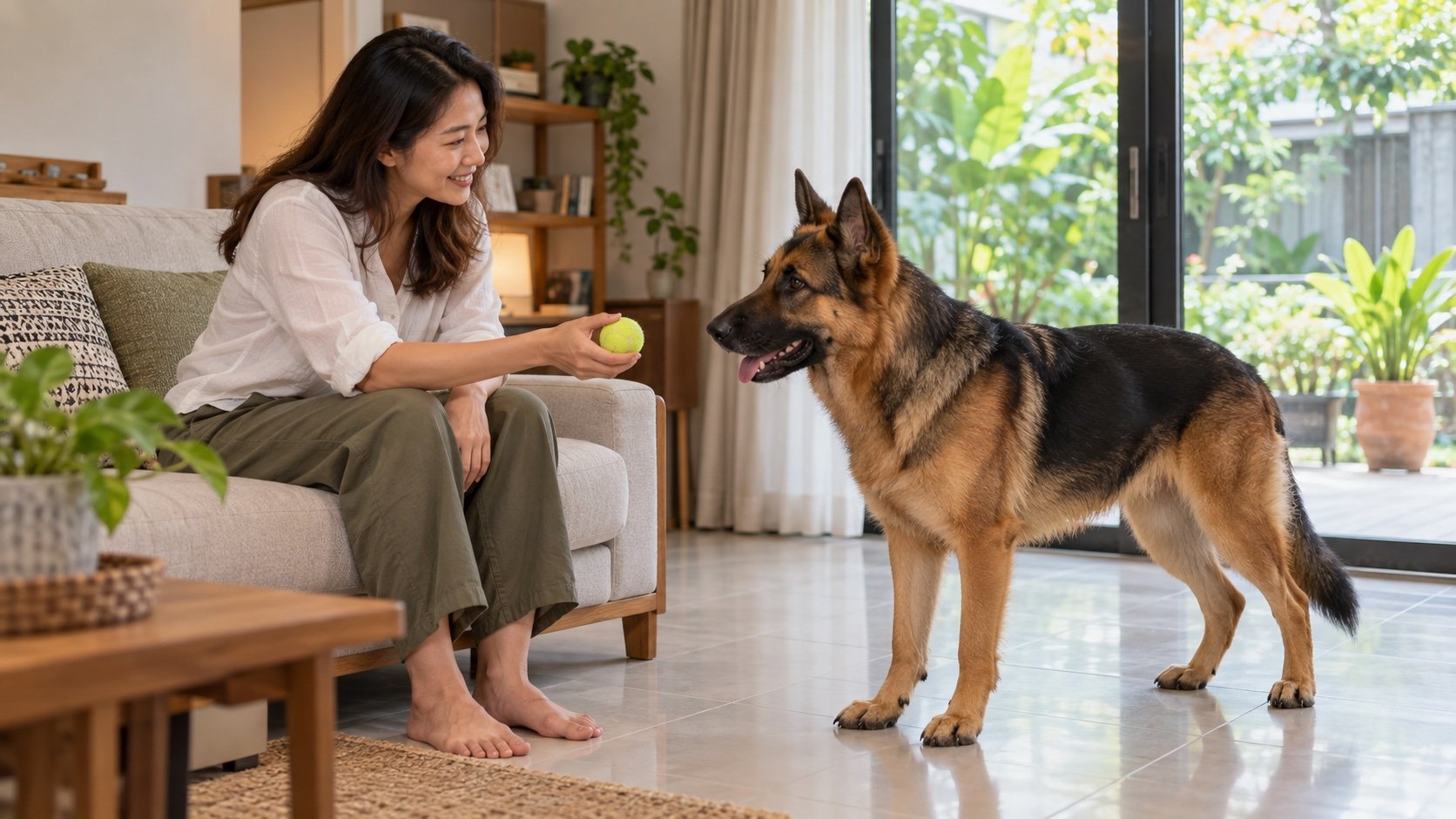
Affection and giving in are not the same thing
Here, indulgence means providing the desired outcome following a behaviour the household wants to reduce. It does not mean that affection, shared play or attentive care is inherently harmful. Focus on what the dog does to obtain the interaction.
If calm requesting is the goal, it must also work. Do not overlook quiet waiting and respond only when demands intensify. Agree with the trainer on a manageable alternative and arrange regular opportunities for appropriate play and activity.
This is not a reason to ignore every vocalisation. Fear, pain and necessary care require appropriate responses. Understand the cause and meet basic needs rather than applying a demand-barking plan indiscriminately.
Household consistency matters
If one person waits for an appropriate request while another starts play whenever barking occurs, the old behaviour can still succeed. Agree on one clear target, what the dog should do instead and how each person will respond. Choose a plan the household can realistically maintain.
If behaviour escalates or the arrangement becomes difficult to manage safely, review it with the trainer rather than adding force or harsher reprimands. Managing situations so the dog can succeed supports learning for both dog and owner.
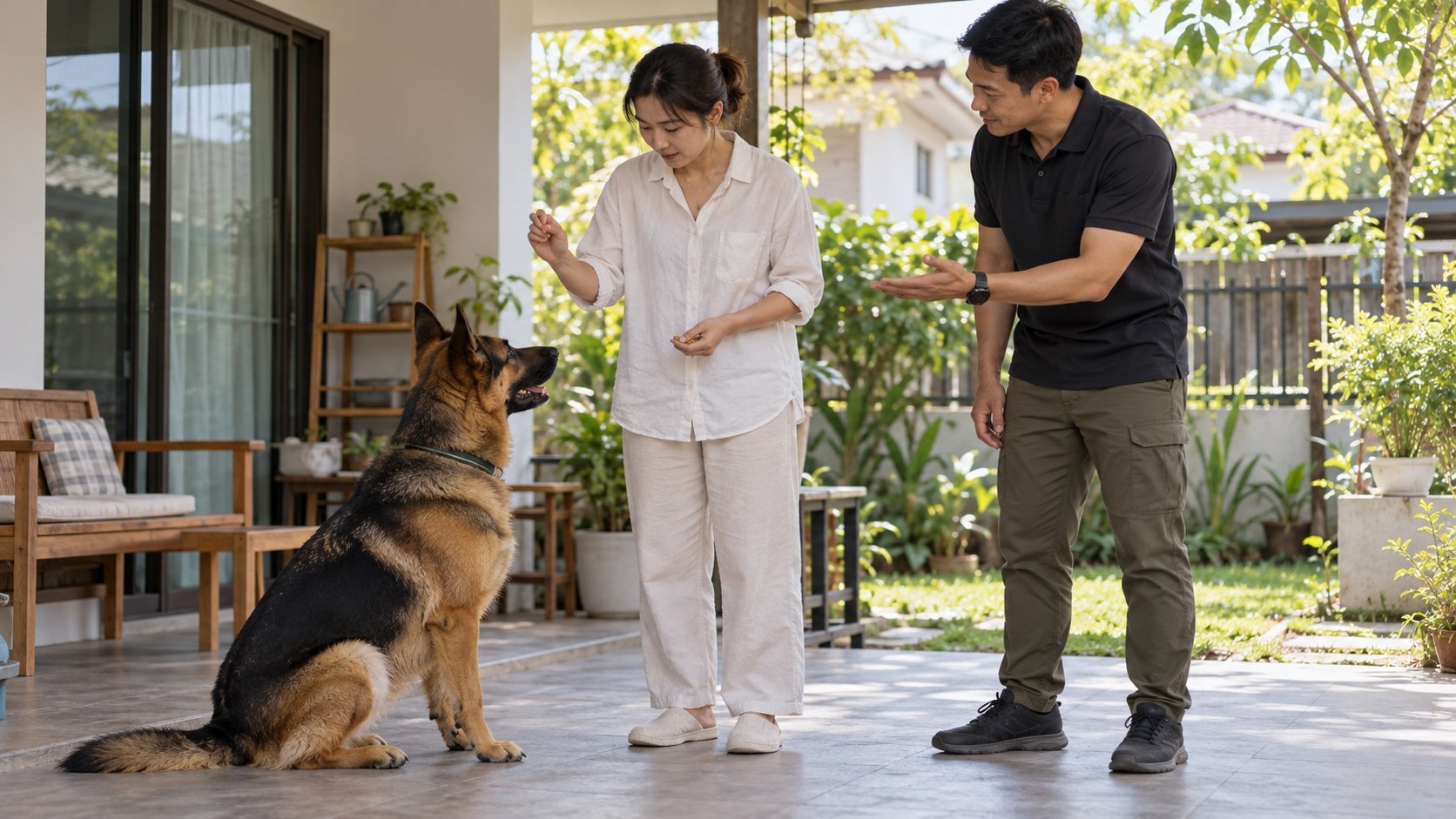
Handover should include daily routines
Owners should practise cues, rewards and everyday activities with coaching before the dog comes home. Explain what normally follows the unwanted behaviour so the home plan addresses actual routines, not just performance during a demonstration.
Useful follow-up observations include the person's response as well as the dog's actions. Training involves both teaching the dog and helping the household maintain clear, workable consequences. New skills alone do not erase old habits that continue to receive rewards.
Discuss Obedience Training or Board & Train with Siam Elite K9 around your household's routines, owner participation and the transition home. The practical goal is for owners to use the skills and understand which everyday responses need adjustment: Siam Elite K9
Discuss training and the transition home through the Siam Elite K9 contact page or Siam Elite K9 on Facebook.
Further reading
Battersea: Reinforcement history and distractions
Dogs Trust: How attention can maintain jumping
Best Friends Animal Society: Practising skills across situations