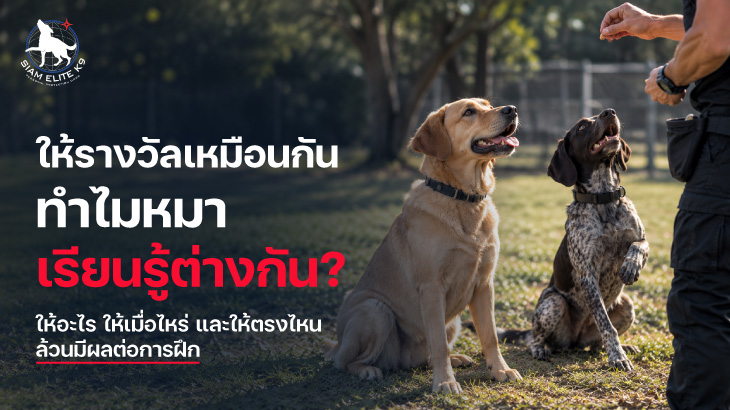
“What treats does my dog like?”
is a useful question, but a reward system goes further. We also consider what the dog learns from each delivery. The same reward can lead to different results when its timing or placement changes.
Start with the type of reward. A dog may be motivated by both food and toys, but a piece of chicken and a game with a ball do not necessarily have the same effect. Food may be easier to deliver when working on precise obedience positions. A ball may be more useful when the aim is to increase enthusiasm and the desire to work. The choice depends on how that individual dog responds.
A trainer therefore asks both “What does this dog enjoy?” and “What kind of performance does this reward produce?” If a toy makes the dog too excited to maintain the position being taught, a different reward or delivery method may suit that exercise better. The dog's favourite reward is not automatically the best choice for every task.
Timing matters too. A dog does not automatically know that a treat is being given for something they did ten seconds earlier. They may have stood up, moved away or done something else in between. What happens closest to the reward may be what they connect with it.
Marking helps identify the moment we want. Think of pressing a camera shutter to capture a particular instant. When the dog lies down promptly in the correct position, the handler says “Yes!” at that moment, then brings out the reward. Once the dog has learned the marker's meaning, it tells them which behaviour earned the reward. Saying it after the dog has already stood up can send a different message.
Reward placement is part of the exercise as well. Imagine a dog heeling correctly on the handler's left. If the handler reaches too far forward to deliver food every time, the dog may begin moving ahead to meet it. The starting position was correct, but the delivery encourages a different position. We need to consider both where the dog is before the reward and how our hand invites them to move.
When training is not producing the result you expected, observe your reward delivery before changing the cue. Where was the food when the dog got it right? Did the marker capture the intended moment? How did the dog move to collect the reward? These details can help explain the behaviour you are seeing.
For owners who want everyday commands to be clearer and more reliable, Siam Elite K9 offers Obedience Training. Tell us what you are working on and where you are getting stuck so we can discuss a training option that suits you and your dog. Explore our services at https://www.siamelitek9.com/obedience-training
Related Content

World Animal Day reminds us to love dogs and deeply understand their behavior. This article offers guidance on training and caring for dogs to build a warm and lasting bond.
2 Oct 2026

Some dogs show distress within minutes of being left. Learn why an automatic feeder cannot replace daily care and how to plan for a trip.
15 Oct 2026

