Before dog boarding, an owner may spend days choosing accommodation while their dog meets the place and the people for the first time on departure day. The room is ready; the relationship is only beginning. Both deserve attention when preparing for a stay.

Imagine a dog walking through a garden beside their owner, then stopping when the lead passes to a new person. The garden has not changed. The person helping the dog navigate it has. That pause gives the carer useful information about how to begin the handover.
Dog boarding: the person is part of the environment
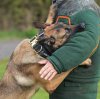
A dog's surroundings include people's actions as well as sounds, smells and physical space. A direct approach or an immediate attempt to touch can prompt retreat in some dogs. A person who allows distance and time may instead give the same dog an opportunity to investigate.
Early progress can be modest: walking past the carer, resting at a distance, or choosing to approach again after moving away. Recognising these responses helps a carer avoid asking for more interaction before the dog is ready.
What research contributes
Shiverdecker and colleagues studied dogs within 40 hours of entering an animal shelter. Human-interaction conditions included passive company, petting and play. Comparison conditions involved being alone in a secluded area or remaining in the usual housing area. Blood cortisol declined in the human-interaction groups, with no comparable reduction in the control conditions.
This was shelter research, not a test of boarding businesses. It cannot establish that any unfamiliar person will reassure every dog. Its practical relevance is the role that human interaction can play alongside the physical setting. A prepared room does not answer every question about care.
Prepare an introduction, not a test
Describe actual situations to the provider: perhaps your dog retreats from reaching hands but walks comfortably beside a person, or eats more readily with distance from other dogs. These details help shape the handover more usefully than a general label such as shy.
Ask whether an introductory visit or short familiarisation is available. The aim is a manageable experience, rather than meeting everyone and trying every activity at once. Repeated retreat, persistent watching of exits or difficulty settling are reasons to review the approach with the carer.
Discuss familiar belongings, food and routines in advance, following the provider's safety requirements. Disclose significant fear or previous escape attempts before booking so the arrangement can be assessed realistically.

A useful handover continues after departure
Explain how your dog usually rests and what changes when they become unsettled. Normally rests after the morning walk, but paces and watches the door when worried gives the carer something concrete to compare with. Agree on updates and what should happen if adjustment is difficult.
During an owner's absence, everyday care still needs someone responsible for it. Suitable boarding brings feeding, movement, rest and responses to changes into one care arrangement. Preparing the relationship with the carer helps that arrangement begin more thoughtfully.
Contact Siam Elite K9 to discuss boarding preparation and your dog's routine. If you also want specific learning goals during the stay, ask separately about Board & Train so the plan reflects those goals: Siam Elite K9
Discuss your dog's needs through the Siam Elite K9 contact page or Siam Elite K9 on Facebook.
References
Shiverdecker, M. D., Schiml, P. A., & Hennessy, M. B. (2013). Human interaction moderates plasma cortisol and behavioral responses of dogs to shelter housing. Physiology & Behavior, 109, 75-79. PubMed abstract.